The Hidden Emotions Behind My 90’s Nostalgic Art
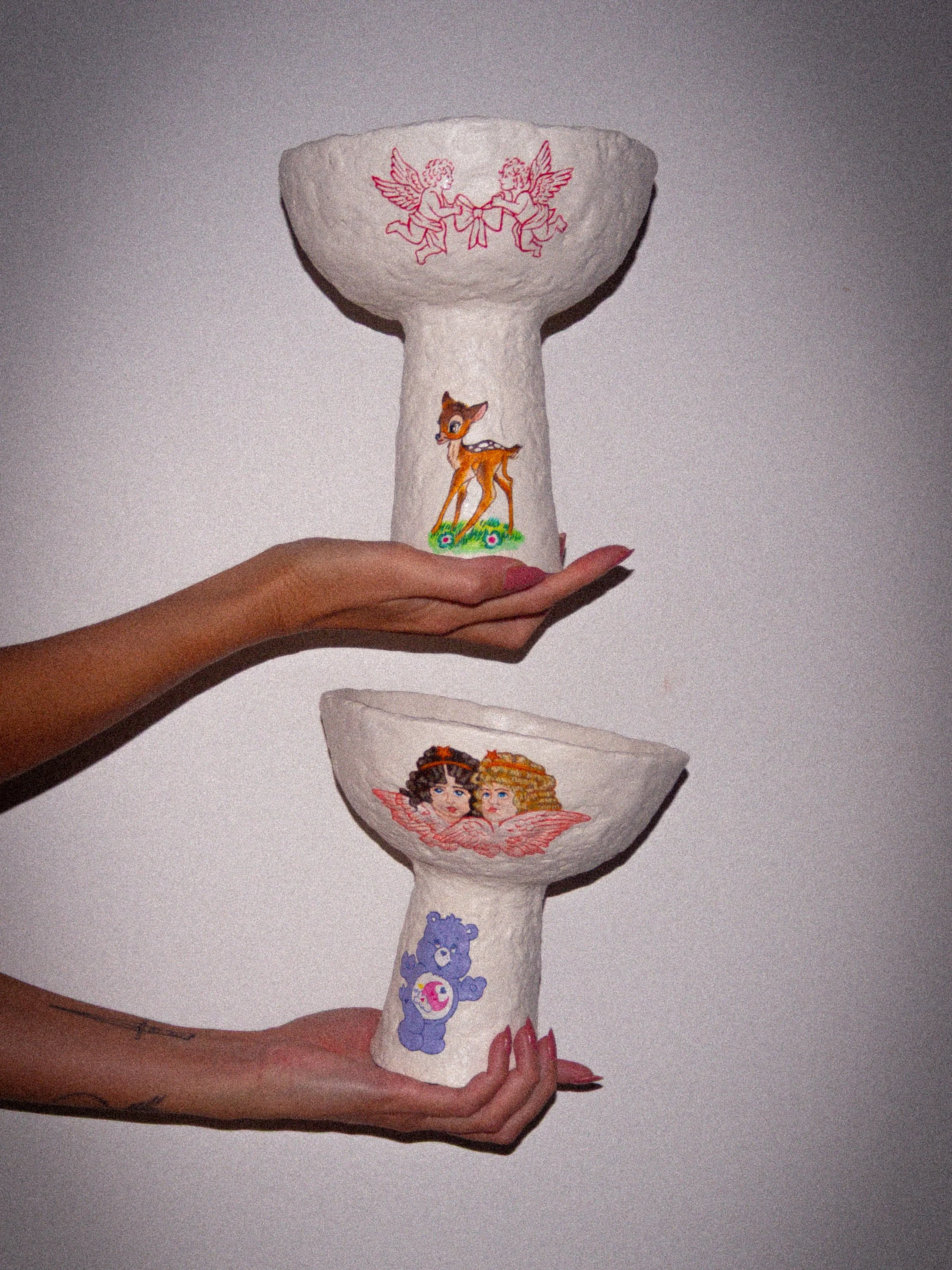
From a distance, my art often looks like a sugar-rush memory: neon Tamagotchis, bubble-gum gadgets, cartoon daydreams, and the unmistakable glitter of the 90s. People see the colours first - the loud, happy palette of an era that felt carefree and wonderfully chaotic. They see childhood toys, after-school cartoons, and the strange but loveable technology that defined so many of our early worlds.
But behind the fun - behind the glossy nostalgia - there is something quieter. Something I don’t always talk about.
My 90s series is, in truth, an act of remembering.
When I paint those playful objects, I’m not only reaching for a decade.
I’m reaching for my mother.
She passed away when I was a teenager, more than 21 years ago. And grief is a strange thing - it’s not loud or dramatic the way people imagine. Often, it’s subtle. It sneaks in through the smallest details, the ones you don’t even expect. Over time, I’ve found myself forgetting things I never thought I’d lose: the exact sound of her voice when she called my name, the way she laughed when something genuinely surprised her, the little routines that once made up the shape of my life.
Forgetting is the part no one prepares you for.
It’s quiet.
And terrifying.
So I paint.
Not because it fixes the forgetting, but because it slows it down.
Every 90s object I paint is like a key to a door I’m trying desperately to keep open. The toys, the cartoons, the colours - they’re not just aesthetics to me. They are placeholders for memories that might slip away if I don’t tend to them. They take me back to Saturday mornings on the floor, snacks between us, cartoons filling the room with the kind of innocent joy that only exists before life teaches you its sharper edges.
When people tell me my work makes them smile, I love that. I want that. Joy is part of the story too - these objects were fun, they were magic, they were small portals into a version of childhood that felt endless.
But beneath that joy is an ache. A longing to hold onto something that time keeps trying to dilute. Painting becomes my way of pressing pause. My way of gathering pieces of a past that is both beautiful and painful, both vibrant and fading.
My nostalgia isn’t just aesthetic.
It’s survival.
It’s remembrance.
It’s a conversation with the parts of myself that still live in that decade, holding onto the person I lost too soon.
So when you see a bright, playful 90s painting from me, know this:
yes, it’s fun,
yes, it’s colourful,
yes, it’s a love letter to a decade so many of us grew up in.
But it’s also something softer - a quiet act of devotion to my mother, to memory, and to the time in my life when she was still here.
And in painting these pieces, I get to sit with her again, even if only for a moment.